
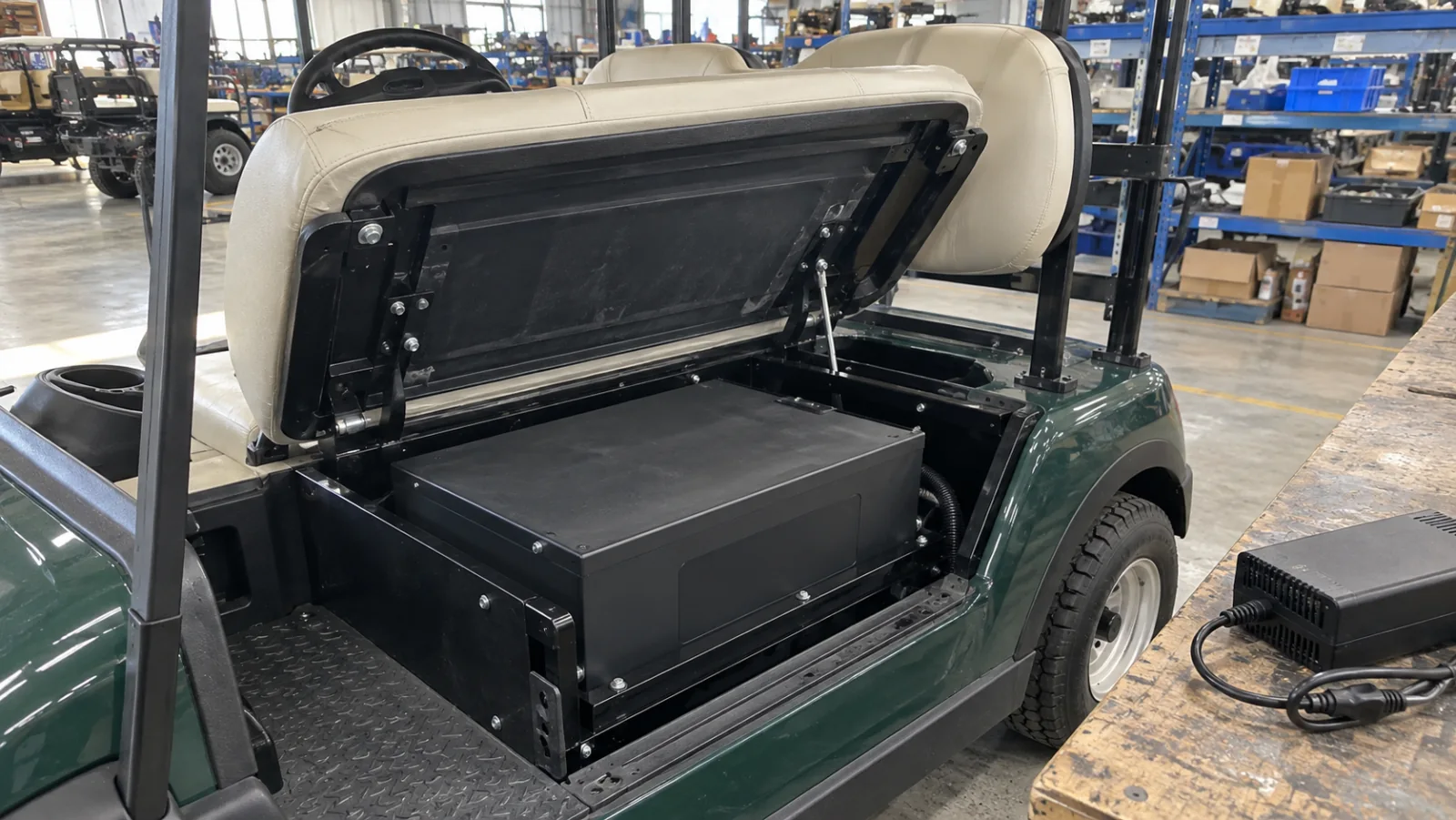
Battery planning starts with the working day: record the route, passenger or cargo load, service hours and reliable charging windows, then ask the supplier to confirm a battery-and-charger configuration against that schedule. A published range alone does not establish whether a vehicle will complete your operation.
This guide helps a fleet buyer prepare that discussion. The aim is a written, model-specific operating plan before ordering, with clear responsibilities for charging, support and replacement parts.
Build a duty-cycle worksheet
Use one worksheet for each distinct job. A guest-transfer cart, a grounds vehicle and an evening shuttle may share a parking area but have different working days. Record normal demand and the busiest credible day separately. If measurements are unavailable, label estimates and arrange to check them rather than presenting them as observations.
| Input | What to record | What to ask the supplier |
|---|---|---|
| Route | Distance per return trip and trips per day | How should this route be evaluated? |
| Working hours | First departure, last return and standby periods | Can the proposed configuration cover this schedule? |
| Load | Typical and busiest passenger or cargo demand | Which quoted seating or cargo configuration applies? |
| Site conditions | Gradients, surfaces and stops | What additional route information is needed? |
| Charging windows | Earliest connection and latest departure | Does the exact battery-and-charger combination support them? |
| Charging demand | Vehicles returning together and available spaces | What charger documentation should the electrical professional review? |
| Service cover | Vehicles that must remain available | What support and replacement arrangements are available? |
Keep a route sketch with the worksheet. Mark the charging location and any journeys to storage, cleaning or maintenance. These movements belong in the daily distance even when they carry no passengers.
Read the battery specification in its model context
The site’s FAQ says most published configurations use deep-cycle maintenance-free lead-acid batteries. TG45 and TG65 are identified as LiFePO4 configurations; the Hauler Compact and Transit Max configurations shown use lead-acid batteries. Confirm the exact model and variant instead of applying one battery description to the entire range.
| Published model | Seating | Listed battery | Published range |
|---|---|---|---|
| Trailblazer GT TG45 | 4 | 48 V 150 Ah LiFePO4; BMS and relay protection | 100 km |
| Trailblazer GT TG65 | 6 | 48 V 150 Ah LiFePO4; BMS and relay protection | 80 km |
These figures come from the manufacturer’s 2025 model-year configuration sheets, revision 20250901, shown in the specification index. They are manufacturer specifications, not independent route-test results. The two models have the same listed battery description and different published ranges; selecting by battery capacity alone would miss that distinction.
Ask for the conditions behind the range figure, the supplied charging instructions and written confirmation of any changes from the published sheet.
Turn a timetable into a useful enquiry
Hypothetical planning example — not a vehicle performance calculation: a property estimates 18 return trips at 1.5 km each, plus 3 km of positioning travel. Its daily planning distance is 18 × 1.5 + 3 = 30 km per vehicle.
The last vehicle returns at 19:00 and the next departure is 07:00, leaving 12 hours on the timetable. If staff can connect it only at 21:00, the actual available charging window is 10 hours. Record the shorter window in the enquiry. A 30-minute lunch stop is a separate possible window that requires confirmation for the proposed configuration.
Neither 30 km nor 10 hours proves that a particular vehicle is suitable. Send the route, loads and timetable together and ask the supplier to assess them. Do not convert a catalogue range into a guaranteed number of working days or infer charging time from capacity alone.
Plan the charging area with the right people
Mark how vehicles enter, park, connect and leave, including the number returning simultaneously. Give the proposed charger information and site plan to a qualified electrical professional to assess supply and installation requirements. Ask the supplier for the exact charger model, input requirements, operating instructions and any site conditions that must be met.
Assign responsibility for connecting vehicles and checking that they are ready for the next shift. An overnight window on paper is useful only if the operating routine makes it available. If evening work changes that routine, submit the revised schedule before confirming the order.
Confirm replacements and service cover
Ask how a replacement battery or charger is matched to the vehicle model, battery configuration and specification revision. Request part identification, availability, lead times and the applicable service or warranty documents. Confirm who can perform replacement work and what the supplier requires to maintain support.
If considering a spare battery, first ask whether the proposed vehicle supports an approved replacement arrangement and what handling, storage and installation requirements apply. Confirm charger compatibility in writing. A matching voltage or connector should not be treated as supplier approval for an interchangeable component.
Check these points before ordering
- Attach the duty-cycle worksheet and distinguish measured inputs from estimates.
- Record the exact model, seating or cargo variant, battery chemistry, voltage and capacity on the quote.
- Identify the supplied charger and obtain its input requirements and charging instructions.
- Obtain the supplier’s written assessment of the route and available charging windows.
- Have the electrical professional review the charging installation requirements.
- Confirm replacement part identification, lead times and service responsibilities.
- Record differences from the published sheet so later repeat orders can be checked against the same specification.
Frequently asked questions
Can I choose solely by published range?
Use it to shortlist models, then ask for an assessment of your route, load and timetable. The published 100 km for TG45 and 80 km for TG65 are specification references, not commitments for your daily service.
Can every cart use the same replacement battery or charger?
Do not assume interchangeability across the vehicle range. Obtain written compatibility confirmation for the exact model and battery configuration before including a replacement in the order.
What should I send with the first enquiry?
Send the model shortlist, vehicle count, route distance, loads, working hours, charging windows and site location. Add the proposed charging layout and any deadline for vehicles to return to service.
Sources, scope and next step
Battery and model details above are limited to the site FAQ and the manufacturer’s sheets accessible through the specification index, revision 20250901. This guide provides a procurement worksheet; it does not establish battery life, charging speed, operating cost or guaranteed route performance.
Compare golf carts and lifted carts, then send your completed worksheet through the enquiry form. Dealers arranging repeat orders can also use the distributor programme to discuss configuration consistency and support.
Coordinate these charging inputs with the hotel shuttle scheduling worksheet and keep replacement battery and charger references in your fleet spare-parts plan.
← Back to all guides