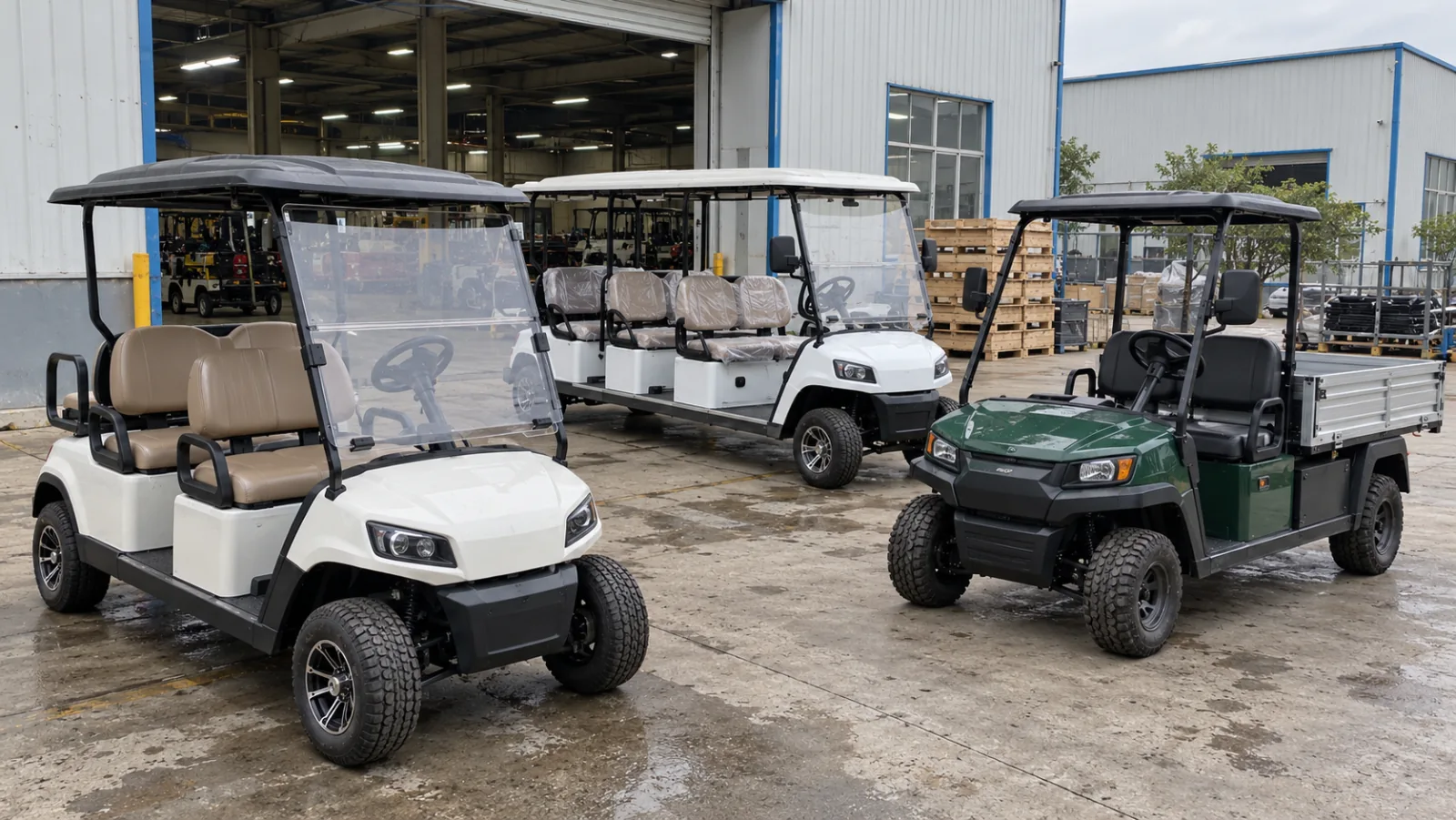
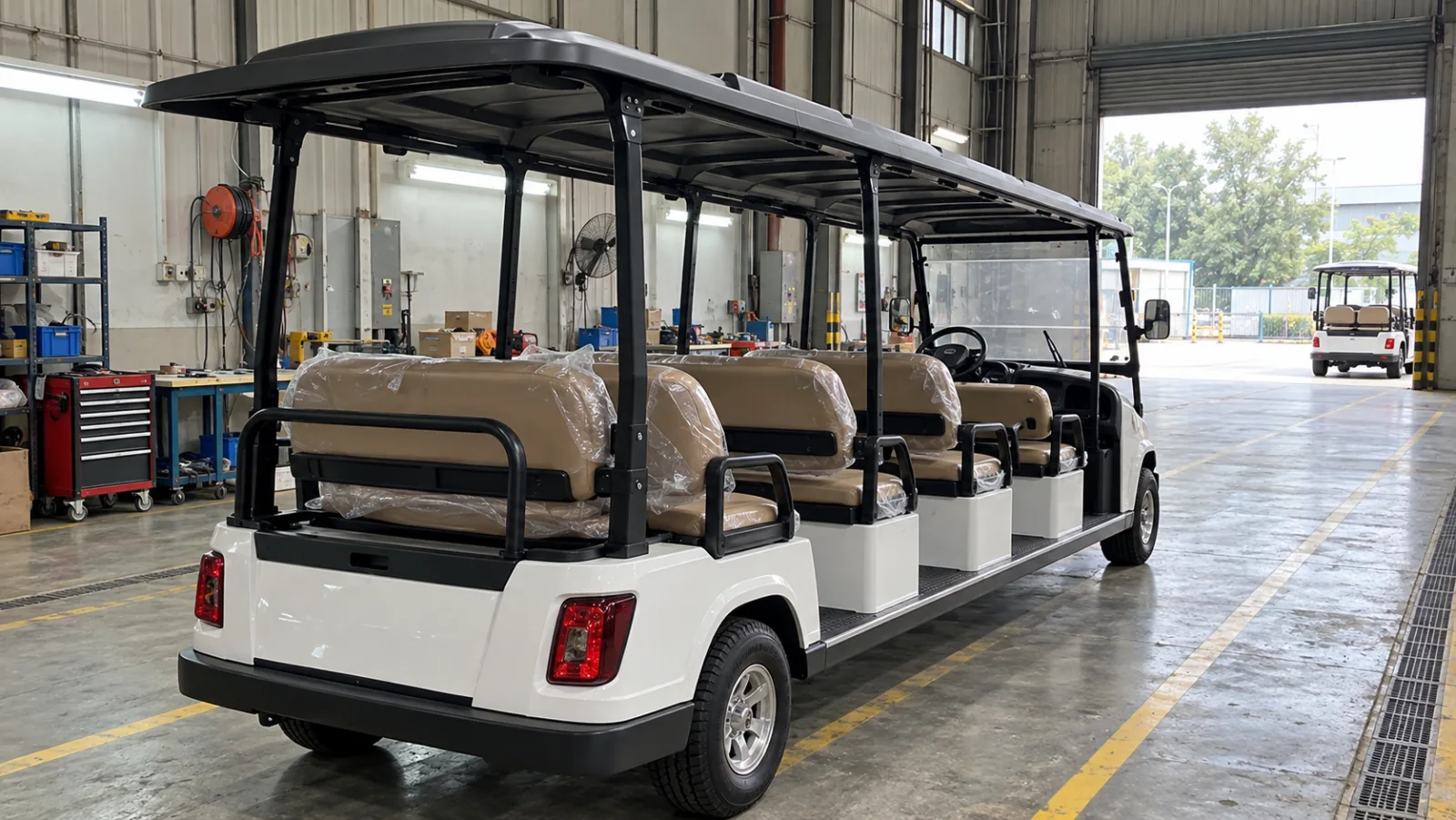
Size a shuttle fleet around its busiest service window, usable passenger places and complete route cycle. Calculate vehicles in service first, then separately cover charging, maintenance and unexpected interruptions.
A daily guest total hides breakfast, group check-in and event queues. Define stops, direction, operating times and acceptable wait. The resorts and hotels application page provides context for the operating brief.
Record peak demand before selecting a vehicle
Use reception records and observations at the actual stops. Count passenger departures on each route, rather than room occupancy. A guest travelling out and returning creates separate journeys; do not combine opposite directions unless the schedule can serve both.
| Worksheet field | Record | Planning effect |
|---|---|---|
| Service window | Start, end and overlapping activities | Sets the period that must be covered |
| Passenger departures | People needing each direction in that window | Defines the transport demand |
| Arrival pattern | Group arrival times and individual arrivals | Reveals bursts hidden by averages |
| Luggage and assistance | Bags, loading needs and boarding assistance | Changes usable places and stop time |
| Route and stops | Distance, access restrictions and shared sections | Defines the actual operating cycle |
| Service expectation | Departure timetable and acceptable wait | Tests whether capacity arrives in time |
| Vehicle availability | Charging, maintenance and driver coverage | Separates owned vehicles from usable service |
Separate peak and quiet periods, including documented event or seasonal peaks. Mark estimates clearly and observe the route before fixing an order quantity.
Measure a complete operating cycle
Time a full cycle from readiness at the starting stop until the vehicle is ready there again. Include outbound travel, boarding, luggage handling, unloading, the return or repositioning journey and delays at gates or pedestrian crossings. Record assistance needs, driver checks and handover time.
Repeat observations during busy conditions; empty test runs miss queues and slower boarding. Retain the observations behind your conservative planning cycle. Include repositioning between shared routes: a vehicle cannot serve both simultaneously.
Confirm usable passenger places
Published seat count is a catalogue reference, not an automatic passenger allowance. Confirm the exact layout, whether the published total includes the driver, and the permitted luggage arrangement. Calculate usable passenger places after allocating the driver position and any seating unavailable because of the approved luggage or operating arrangement.
Confirm rated payload and combined passenger and baggage load with the supplier. An unused seat is not automatically a luggage rack. Compare passenger shuttles and the specification index; use the vehicle selection guide for access and dimensions.
Worked example: active vehicles for a peak window
This hypothetical exercise is not a hotel case study or performance guarantee. Assume arrivals spread sufficiently for planned departures, with vehicles ready at the starting stop. The return is assumed empty; all cycle time is included.
| Planning item | Assumption or calculation | Result |
|---|---|---|
| Passenger departures | Demand in a 30-minute window | 24 passengers |
| Usable passenger places | After driver and luggage allocation | 4 per vehicle |
| Complete cycle | Assumed travel, stops and return | 12 minutes |
| Completed trips per vehicle | Round 30 ÷ 12 down to a whole number | 2 trips |
| Capacity per active vehicle | 2 × 4 | 8 passengers |
| Active vehicle requirement | Round 24 ÷ 8 up to a whole number | 3 vehicles |
This capacity estimate does not establish a timetable, acceptable wait or purchase quantity. Check a schedule showing when each vehicle boards, departs, returns and becomes available again.
If all 24 passengers arrive together, 3 vehicles with 4 usable places can carry only 12 on their first departure. The remaining group waits for later departures. A short departure deadline, slower boarding or a delayed return can therefore invalidate the average calculation. Recheck the schedule against each arrival burst and the operator’s waiting-time target.
Plan charging and unavailable vehicles separately
The 3 active vehicles in the example must be available throughout the assumed service. A vehicle charging elsewhere, awaiting maintenance or without a driver does not count toward that active capacity. Identify which quiet periods genuinely allow charging, including travel to the charger and preparation for the next service.
Choose standby cover according to your service policy, maintenance access and consequences of a missed departure. There is no fixed standby quantity established by this example. Record the active requirement, planned unavailable vehicles and any dedicated standby provision separately, checking whether their time periods overlap. Review battery and charger suitability through the battery planning guide; no charging duration is assumed here.
Turn the worksheet into an enquiry
Send the route, peak-demand worksheet, proposed timetable, usable passenger requirement and unresolved questions through the fleet enquiry form. Paste the summary into the message field. Send route photographs, stop layouts and supporting files using the email option on the contact page.
Request confirmation of the configuration, payload, luggage arrangement and battery proposal. Resolve access and charging questions before fixing quantities.
Frequently asked questions
Can I calculate fleet size from room count?
Room count gives context, but demand depends on occupied rooms, party sizes, travel choices and simultaneous activities. Use observed passenger departures and arrival times for the route you intend to operate.
Does more seating always mean fewer vehicles?
More usable places may reduce a capacity estimate, but a larger body can change access, boarding and turning requirements. Compare the full cycle and departure schedule before changing the quantity.
Should the charging vehicle also be the standby vehicle?
Only if it is available when the standby role requires it. Record charging and contingency needs by time period. The same vehicle cannot cover an interruption while it is unavailable for service.
Sources and scope
The linked catalogue and specification index use the manufacturer’s 2025 model-year sheets, revision 20250901. They are first-party product references, not independent validation or hotel operating measurements. The worksheet, example demand, usable places and cycle are planning assumptions; they are not published model performance. Confirm the current supplied specification and measure your own route before ordering.
← Back to all guides