Before requesting a fleet quote: prepare the operating route, passenger or cargo needs, daily schedule, charging conditions, quantities and destination. Ask each supplier to quote the same configuration and state what is included.
Use this checklist to move from a model shortlist to a written order: define requirements, agree the configuration, compare quotations, check shipment records and inspect delivery.
Prepare a brief suppliers can use
Record regular demand, peak periods and the number of vehicles needed simultaneously. Include route photographs and access measurements.
| Information to prepare | Why it matters | Ask the supplier to confirm |
|---|---|---|
| Route surfaces, gradients and narrowest access points | The whole route must suit the vehicle, including parking and loading areas | Dimensions and the proposed configuration’s suitability for the stated conditions |
| Passenger numbers, luggage and cargo | Seat count alone does not describe the job | Seating layout, luggage arrangement or cargo configuration and its stated limits |
| Operating hours, busiest periods and charging breaks | Vehicles need an operating and charging schedule | Battery and charger configuration for review against that schedule |
| Charging location and available electrical supply | The charger and installation must work together | Charger input, connection requirements and charging instructions |
| Models, quantities and required equipment | Different assumptions produce difficult comparisons | Exact model, options, specification revision and any proposed substitutions |
| Destination and preferred delivery window | Production and transport are separate planning stages | Minimum order, loading plan, production timing and freight scope for this enquiry |
Have the charging installation assessed before planning simultaneous charging. Mark unknown route measurements or electrical details as unresolved.
Agree the vehicle configuration
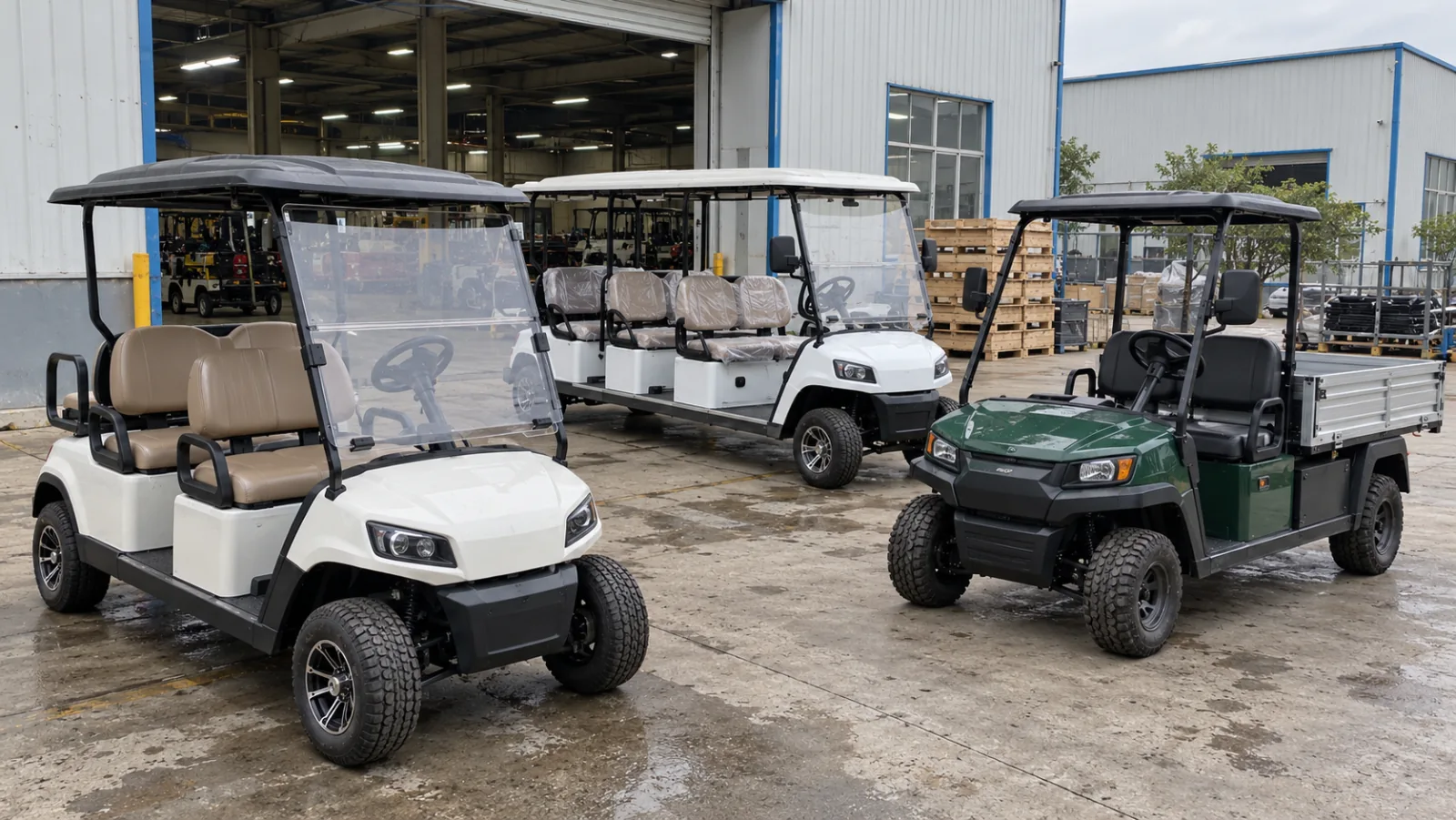
Start with the vehicle catalogue and compare the shortlist in the specification index. Consider golf carts for course and guest movement, passenger shuttles for larger groups, and utility vehicles for goods and maintenance work.
For each model, record seating, body style, dimensions, battery, charger, weather protection and equipment. Identify options separately: extra seats do not confirm luggage provision.
The published index uses manufacturer configuration sheets for the 2025 model year, revision 20250901. Confirm the configuration actually offered, including any differences from those sheets. For distributors, discuss territory, branding and expected order volume through the distributor programme; available private-label options depend on the model and volume.
Compare the whole quotation
Compare matching quantities and equipment. Ask about blank items; do not assume they are included.
| Quotation item | What to check in writing |
|---|---|
| Vehicles and options | Model, quantity, agreed configuration, optional items and exclusions |
| Packing and freight | Packing scope, loading plan, destination, freight terms and where each party’s transport responsibility begins and ends |
| Destination expenses | Whether insurance, import charges, local handling and onward delivery are included or excluded |
| Payment and schedule | Currency, quotation validity, payment stages, production timing and the shipping schedule |
| Parts and after-sales support | Included parts, separately priced parts, availability, lead times, support contact and any warranty terms offered for the order |
Ask which event each payment stage refers to and which documents accompany it. Request clarification of freight terms rather than assuming that a quoted port price includes delivery to your site. Production and ocean transit should appear as separate stages; request production timing after the specification is agreed.
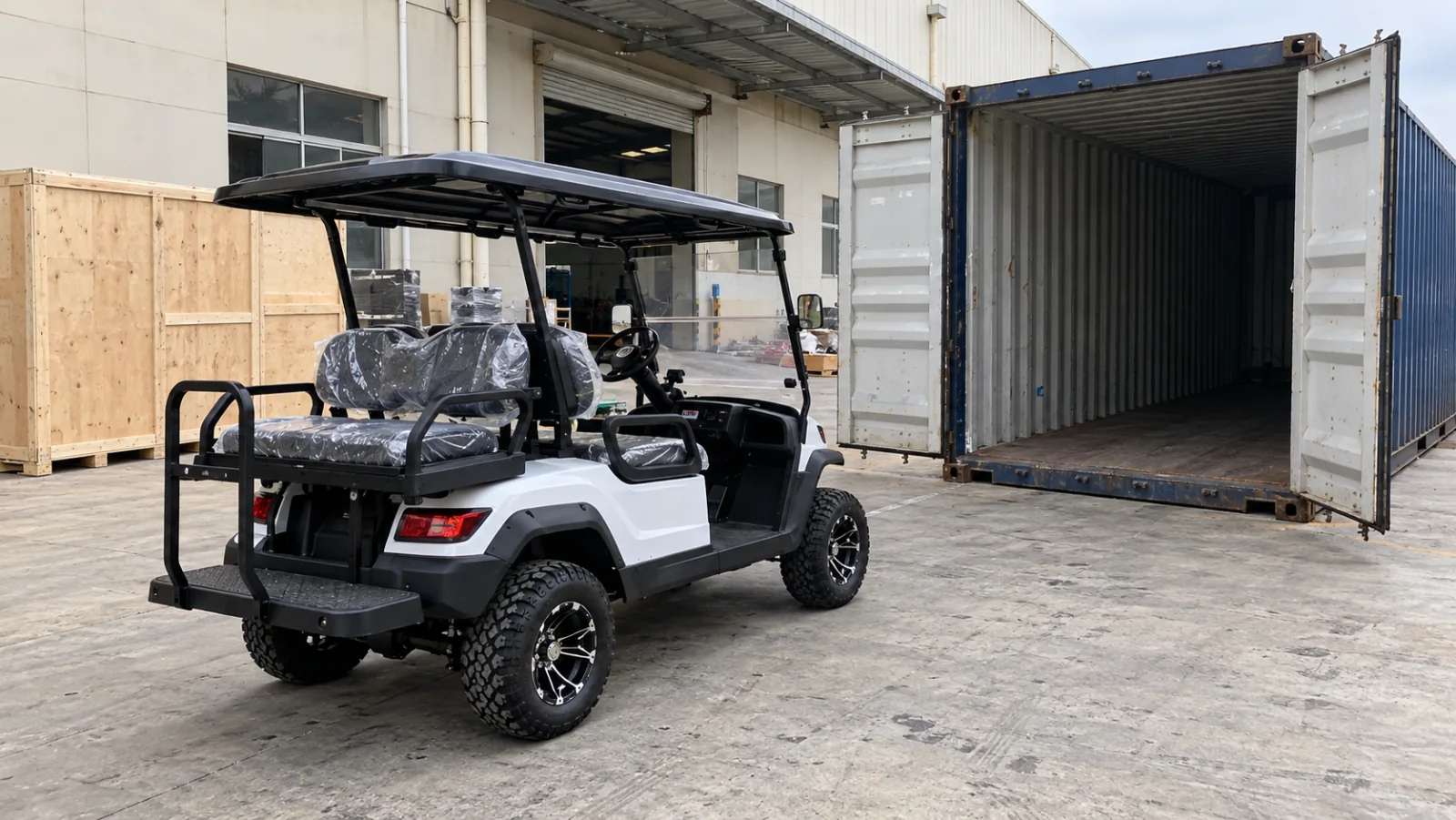
The site FAQ describes ocean-freight planning around a 40 ft high-cube container. Actual loading depends on the model mix. Confirm the minimum order and loading plan for your enquiry instead of converting that container reference into a fixed vehicle count.
Check before shipment and at delivery
Agree the check process before the order advances, including who reviews the records and how discrepancies will be resolved.
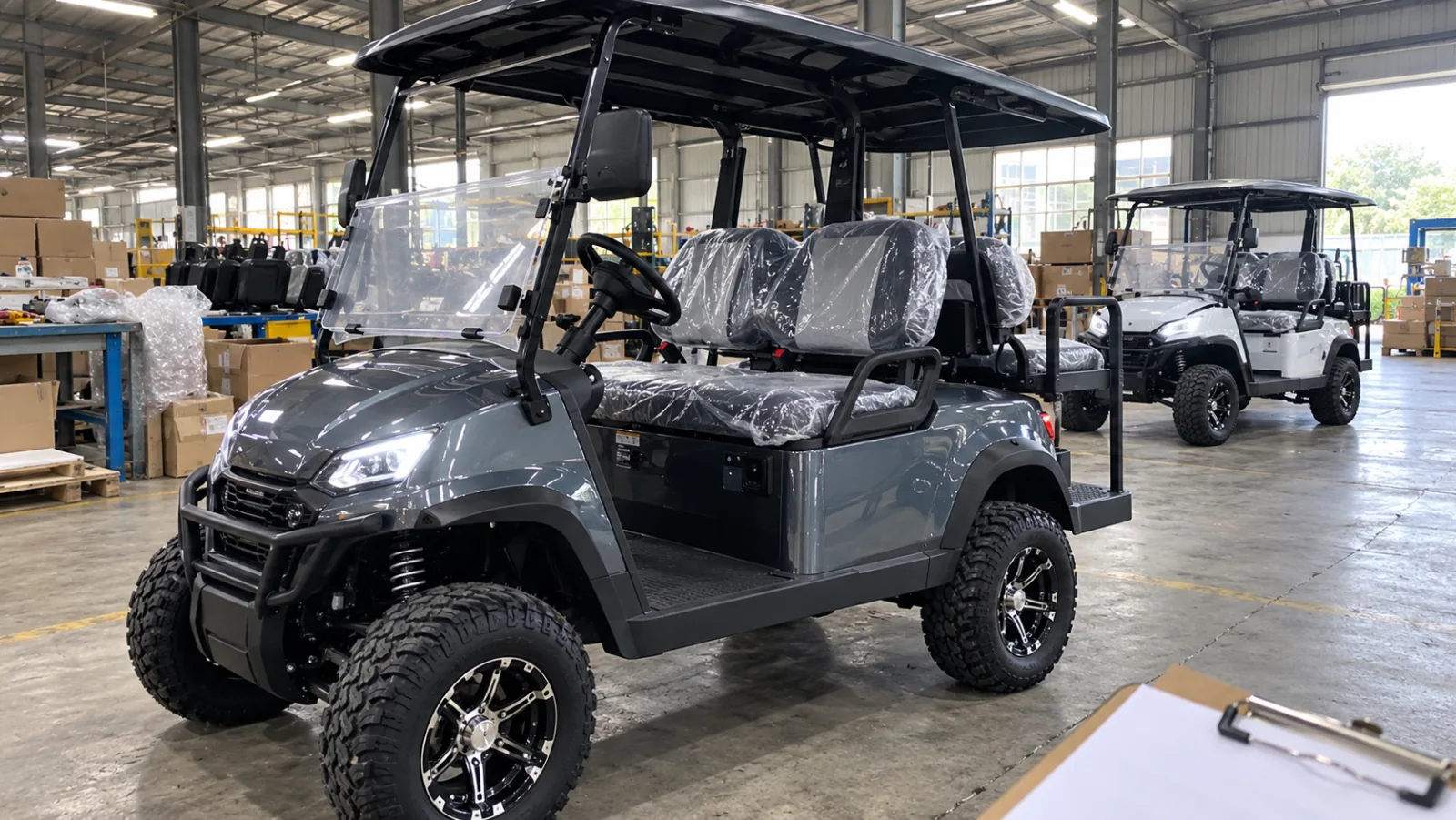
- Before shipment: request the agreed configuration list, packing list and vehicle identification records. Agree photographs or inspection records covering the models, quantities, batteries, chargers and selected options.
- Before dispatch: compare those records with the approved order. Resolve substitutions or missing items in writing, and confirm which manuals, charging instructions and parts references will accompany the shipment.
- At delivery: compare received quantities and identifiers with the packing list. Record visible damage, missing equipment and differences from the order using photographs and the agreed reporting process.
- Before service: complete the agreed handover checks, review operating and charging instructions, and retain the configuration and parts records for future support requests.
An enquiry brief you can adapt
Replace bracketed fields with your information; mark unknowns “to confirm”.
- Application and site: [task, location, route surfaces, access measurements and gradients].
- Demand: [passengers, luggage or cargo, busiest period and simultaneous vehicle requirement].
- Schedule and charging: [operating hours, charging windows, electrical supply and charging location].
- Shortlist: [models, quantities, seating, battery preference and required options].
- Delivery: [destination port or address and preferred delivery window].
- Requested reply: [proposed configuration, exclusions, parts proposal, minimum order, loading plan, freight terms, payment stages and production timing].
Send the completed brief and measurements through the fleet enquiry form. For photographs or other files, use the email option on the contact page. Ask the supplier to highlight unresolved assumptions.
Questions buyers ask
Can different models share one order?
List each model and quantity in the enquiry and request a proposed loading plan. A container reference alone cannot confirm whether that particular mix fits or meets the applicable minimum order.
Should spare parts be included in the first enquiry?
Yes: request a model- and revision-specific list for controllers, motors, chargers, panels, glazing and wear items. Ask which parts are included, which are optional and what availability applies. Do not assume a fleet order includes a parts package.
Does a catalogue listing confirm road-use approval?
No. The road-use answer in the FAQ explains that approval depends on the exact configuration and local requirements. Request the relevant technical documents and confirm requirements for the intended market before ordering.
Sources and scope
This checklist draws on the published specification index, order and service FAQ and distributor programme. Published specifications are first-party manufacturer information for 2025, revision 20250901, not independent validation. Minimum order, loading, timing, payment, freight, support and available options require confirmation in the written quotation for the selected order.
For a mixed order, prepare the container-loading information brief and the initial spare-parts request alongside the vehicle quotation.
← Back to all guides