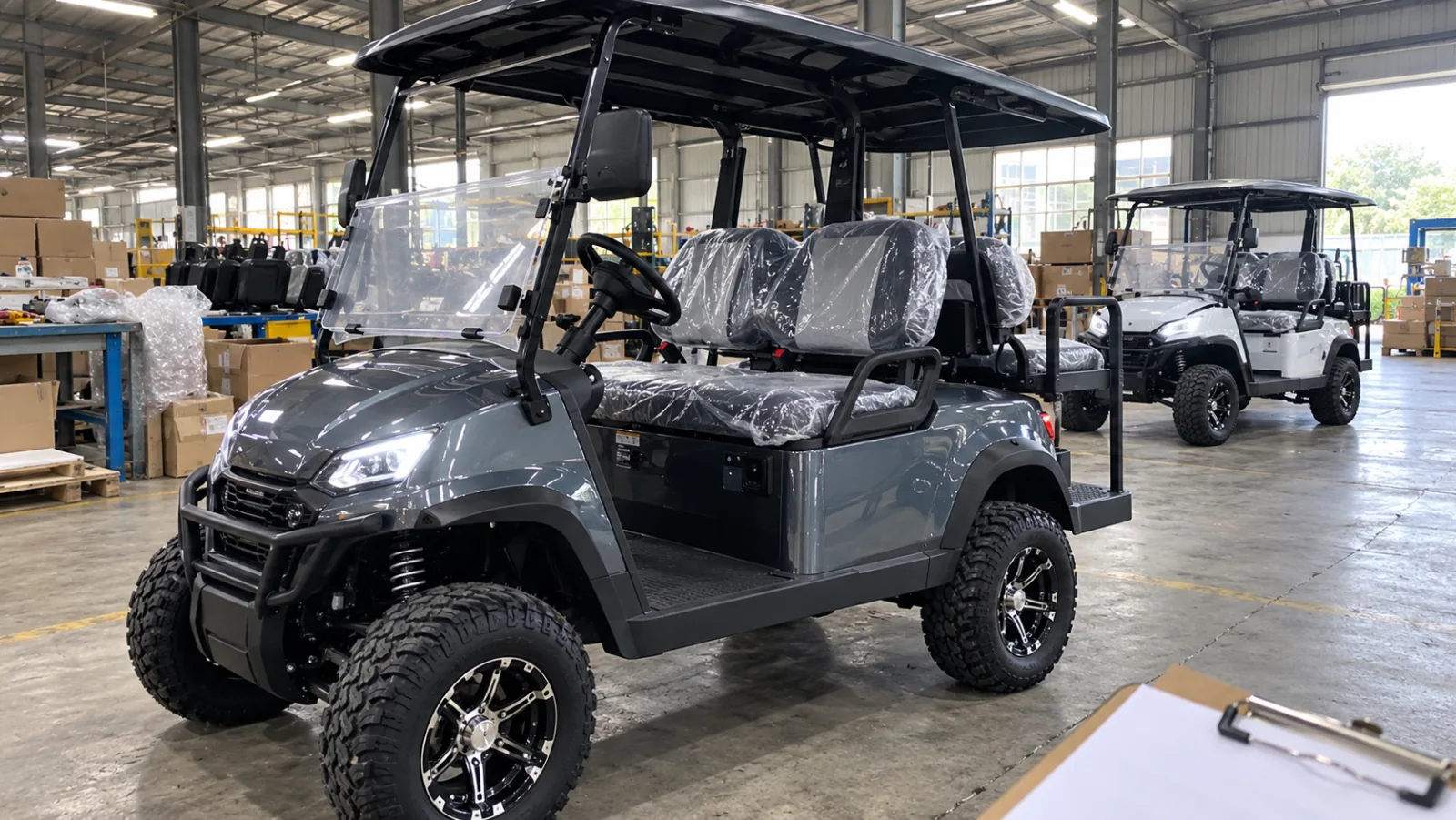
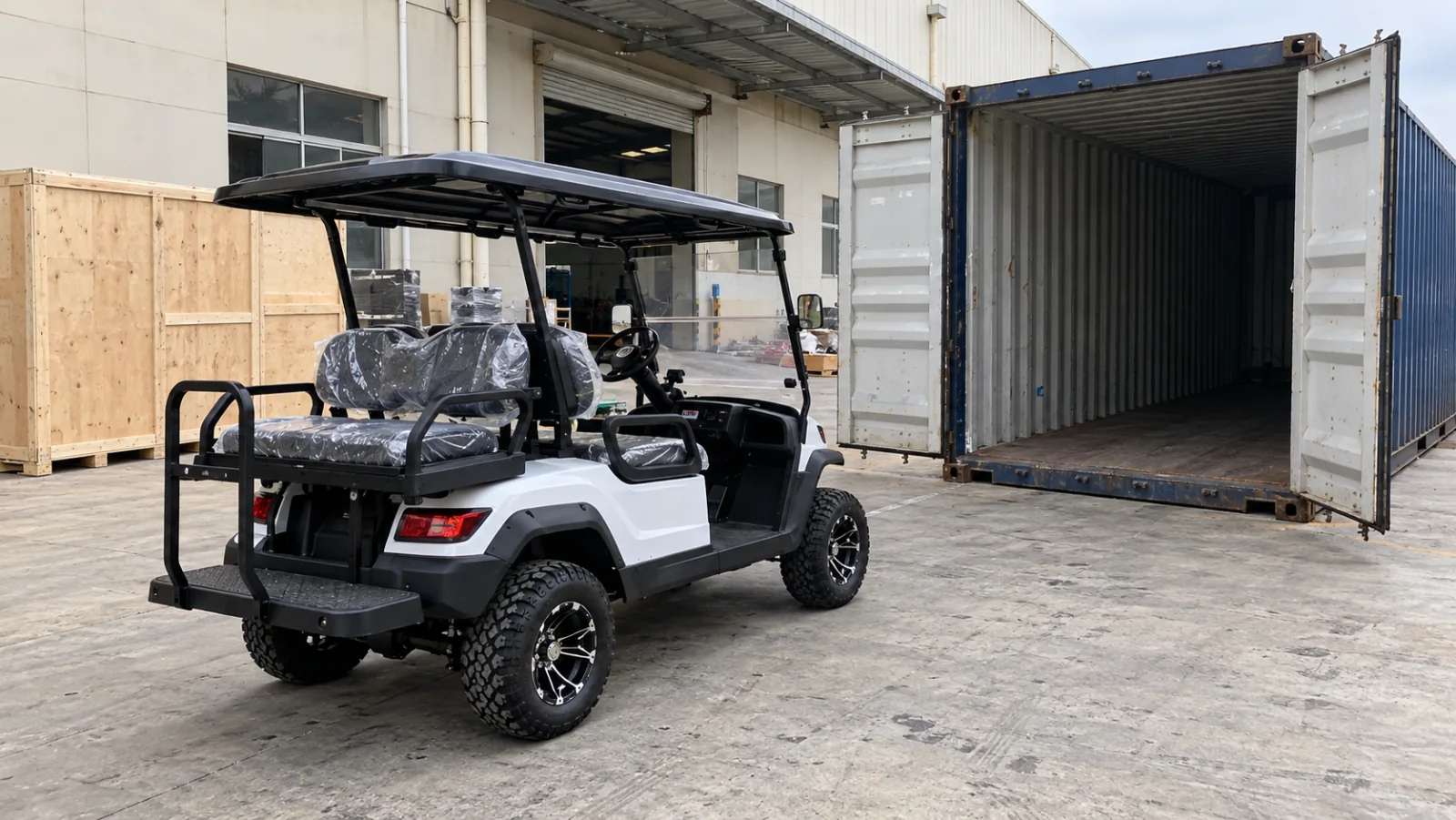
Before asking how many carts fit: list each model, quantity and agreed configuration, then request its packed external dimensions, gross weight and proposed loading arrangement. Have the supplier and carrier confirm the actual container, handling requirements and loading plan for that mix.
For an order combining carts, shuttles and utility vehicles, prepare a packing brief by model. This lets the supplier propose a plan and identify assumptions needing approval.
Separate vehicle specifications from shipping data
Identify models in the vehicle catalogue and configurations in the specification index. List golf carts, passenger shuttles and utility vehicles separately, including options affecting packing.
Overall vehicle dimensions are not necessarily shipping-package dimensions. Ask whether vehicles are assembled, partially disassembled or otherwise packed, which items travel separately, and what preparation and reassembly are included.
The index uses manufacturer sheets for model year 2025, revision 20250901. Request packing data for the configuration actually quoted; do not substitute catalogue vehicle dimensions for missing packing data.
Build a packing data sheet for every model
State units explicitly. Identify each vehicle package and separate carton for later checks against quantities and photographs.
| Data to request | What to record | Why the plan needs it |
|---|---|---|
| Model and configuration | Model, revision, options and assembly state | Changes can affect packing and handling |
| Quantities and package identifiers | Vehicles per model, packages per vehicle and separate cartons | Vehicle counts can omit accompanying packages |
| Packed external dimensions | Length, width, height and units per package | Plans need package dimensions |
| Gross weight | Weight and units per packed item | Supplier and carrier need actual packed loads |
| Stackability | Specific approval and supplier conditions | Do not assume packages can support others |
| Handling points and access | Supplier-specified points, equipment and access | Loading and unloading must suit the packages |
| Loose parts and documents | Contents, linked vehicle/model, manuals and parts references | Receiving staff need to identify accompanying items |
Mark unknowns “to confirm” and name the information owner. Request packing photographs supporting the proposed arrangement alongside measurements and the written plan.
Ask for a plan for the actual model mix
Adding package volumes does not prove a mix fits. Review orientation, door access, handling sequence and the supplier’s securing arrangement. Ask supplier and carrier to confirm the booked container specification, usable space, door opening and agreed handling and loading plan.
The minimum-order FAQ describes ocean-freight planning around a 40 ft high-cube container, with loading depending on model mix. This does not establish vehicle capacity. Request the minimum order and arrangement for your quantities rather than deriving a cart count from that reference.
Confirm who arranges packing, loading, transport, unloading and any reassembly at destination. Request the battery shipment documents and carrier acceptance needed for the actual battery configuration and route from the supplier and carrier. Record unresolved items before approving the shipment proposal.
Agree the review stages and supporting records
Keep one approved model list, packing dataset and loading plan. Changes to quantities, batteries, roofs or options need updated records and supplier review. Approve substitutions in writing before proceeding.
| Review stage | Parties to name | Supporting record | Approval question |
|---|---|---|---|
| Quotation review | Buyer and supplier | Model list, configuration revision and packing assumptions | Are all requested models, quantities and exclusions identified? |
| Loading-plan review | Supplier and carrier, with buyer review | Packed data, container details and proposed arrangement | Is this specific mix and its handling scope confirmed? |
| Before dispatch | Supplier and buyer’s named reviewer | Final packing list, identifiers, photographs and agreed documents | Do the records match the approved order and latest plan? |
| Arrival and handover | Receiving party and named support contact | Receipt check, photographs and discrepancy record | Are quantities, visible condition and loose items recorded against the packing list? |
Agree the supplier’s outgoing checks and records. At arrival, reconcile identifiers and quantities with the packing list; report visible damage and missing cartons through the agreed process. Identify who handles unpacking, reassembly and vehicle handover checks before operation.
A mixed-order enquiry you can adapt
Use the fleet buying checklist if vehicle requirements remain undecided. Otherwise send this brief, marking unknowns “to confirm”:
- Order: [model, quantity, configuration revision and options for each line].
- Destination: [port or receiving address, receiving contact and known handling constraints].
- Packing proposal requested: [assembly state, external package dimensions and units, gross weights, loose-parts list and packing photographs].
- Loading proposal requested: [minimum order, container specification, door access, model arrangement and handling scope for this mix].
- Records and acceptance: [packing list, vehicle/package identifiers, battery shipment documents and carrier confirmation for the configuration and route].
- Commercial scope: [packing, freight, unloading, reassembly, exclusions and the review process for changes].
Paste the brief into the enquiry form; send files through the email option on the contact page. Include repeat-order and branding plans in discussions about the distributor programme.
Questions about mixed-model shipments
Can I calculate a vehicle count from catalogue dimensions?
Catalogue dimensions can help identify the vehicle but cannot establish its packed dimensions, handling clearance or loading arrangement. Request packing data and a confirmed plan for the order.
Can the model mix change after the quotation?
Request a revised quotation and loading review. A substituted model or option may affect packing, documents and handling. Keep the buyer’s approval and the updated records together.
Does the loading plan include unloading and reassembly?
Only if the written scope says so. Identify the receiving party, available equipment, instructions, loose parts and responsibility for each stage before approving the shipment proposal.
Sources and scope
This preparation guide draws on the site’s order FAQ, specification index and distributor programme. Specifications are first-party manufacturer information for 2025, revision 20250901. The guide supplies enquiry and review questions, not a loading calculation. Package dimensions, weights, quantities per container, battery shipment requirements, carrier acceptance, freight terms and timing must be confirmed for the actual order and route.
← Back to all guides